Manual warehouse management
erodes profitsevery day
With short lifecycle goods and strict quality requirements, traditional inventory management is ineffective to ensure business operations.
Loss of control
"inventory age"
No alerts for expired goods in stock, increasing the risk of excess inventory and incurring unnecessary handling costs.
Legal risks
Expired goods create serious legal risks: they can be confiscated, heavily fined, or even held liable for harming consumer health.
Waste of resources due to
scrap



First Expired
First Out
Inventory management method based on the principle of "first expired, first out", prioritizing the shipment of products with the nearest expiration dates.
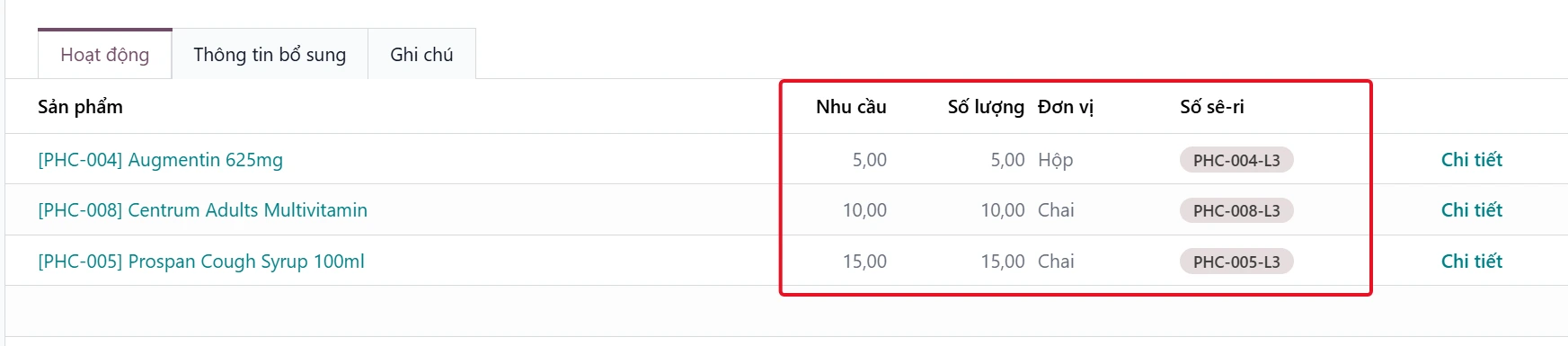
A closed loop from receiving to shipping
1
Receiving
The warehouse records the receiving order, the system prepares to classify by storage area with batch numbers and expiration dates.
2
Quality check &
Warehouse entry
Quality inspection and classification of products into the correct zones, without the need for manual decisions from staff.
3
Warehouse exit
The warehouse records exits by batch & expiration date according to the principlefirst expired, first out.
4
Confirm the exit slip
Staff checks and confirms the exit slip
Key features
Operation FEFO comprehensive
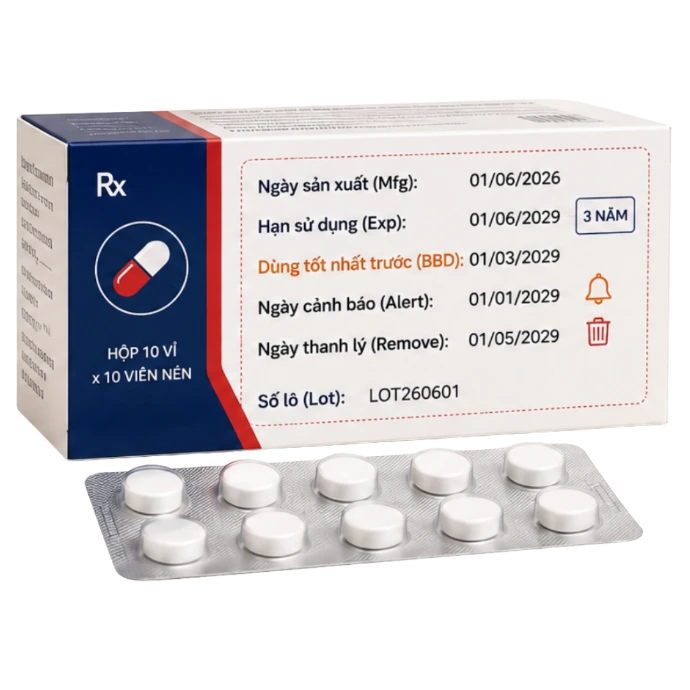
Standardize product parameters
Input products require expiration dates & Lot numbers
When the above indicators are available, simply set important date milestones:Barrier datenotification, Best used before date, Liquidation datefor the first time, the system automatically calculates for all subsequent batches.
Each batch has its own expiration date & liquidation date, while also recording the actual inventory of each batch
Each batch has its own expiration date & liquidation date, to tightly control products in the warehouse comprehensively according to the actual status of each batch.
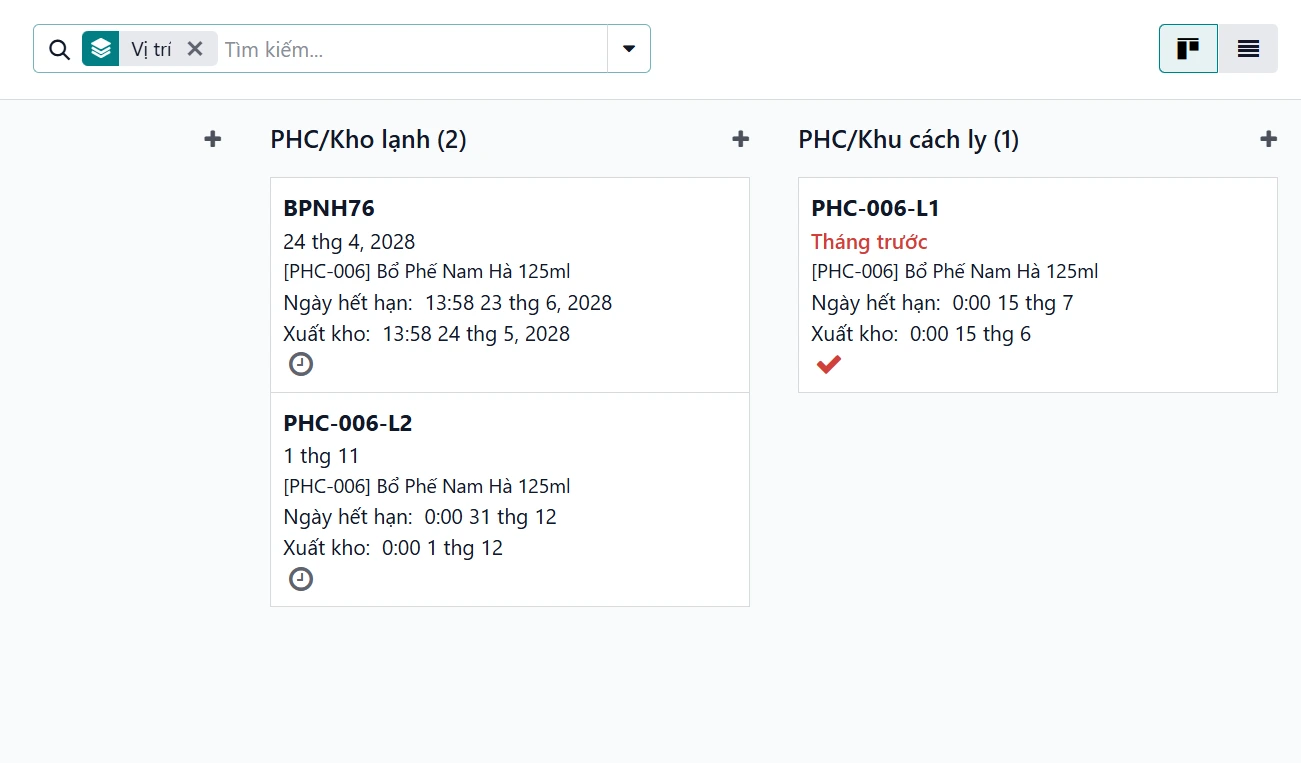
Quality control by cycle
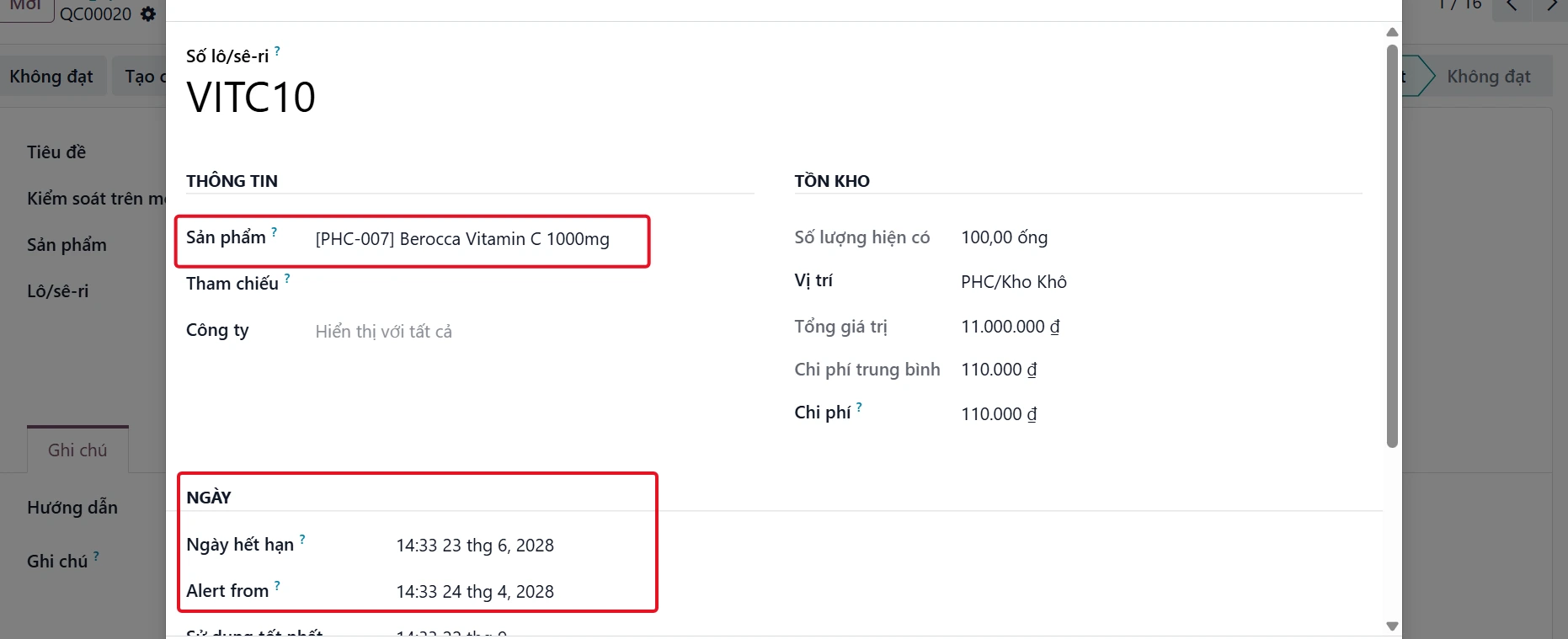
Optimize picking & rotation
When creating an order, staff clearly knows which warehouse to pick from and which warehouse to transfer to. The business accurately controls where each Lot number is located during internal transfers between warehouses - correct batch, correct date.
Sub-zones & Quarantine area
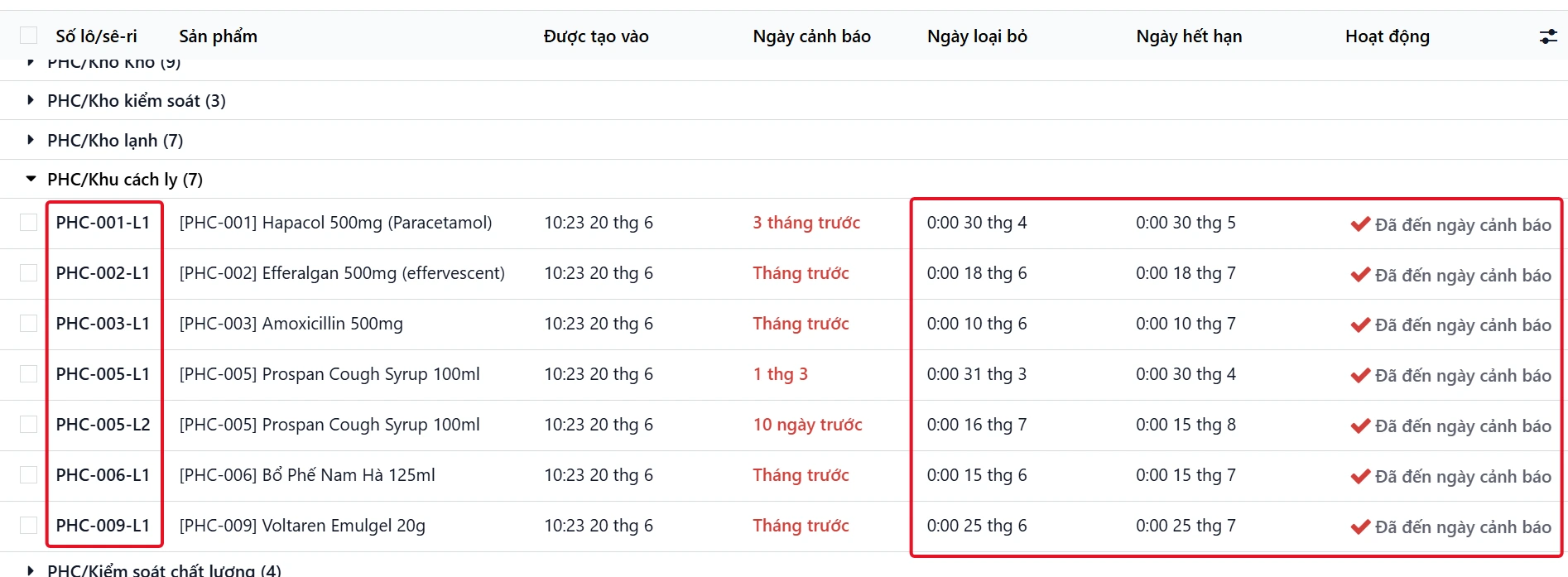
Management by sub-zone &
The warehouse is divided into multiple sub-zones, with goods entering the warehouse by each Lot number with separate expiration dates and liquidation dates. Notably, the “Quarantine area” separates goods close to expiration to expedite their market release.
For businesses that consider expiration dates as a vital factor
🚀 Growth Stage
Businesses in the growth stage or expanding their chain need systematic management.
📈 Standardization Stage
Clear signs are beginning to emerge regarding the need to manage inventory to reduce losses.
Illustrative case study
1,000+
standard GPP sales points
Real-time
Updated by shipment
- HSD cố định, dễ thất thoát nếu không xuất hàng hết hạn trước, FEFO giúp ưu tiên xuất hàng theo nguyên tắc hết hạn trước, xuất trước.
- Ngăn chặn rủi ro pháp lý: tránh bán nhầm hoặc bị tịch thu sản phẩm hết hạn và hệ lụy pháp lý khi ảnh hưởng đến người tiêu dùng.
- Cập nhật realtime theo từng lô, giúp quản lý HSD dễ dàng và ngăn chặn xuất hàng hết hạn.
Implementation roadmap
Start small, expand according to the pace of the business
Advanced package
Comprehensive ERP
Implement as a full ERP project, integrated from sales to finance.
InventoryQualityPurchaseBarcodeInvoicingSaleCRM