From unit inventory to handover, one line of data for every unit
Leonix advises on and implements Odoo ERP combined with AI for property developers and real estate distribution platforms. Unit inventory, sales policies, contracts, payment schedules, and commissions all live in one system. We start from where you are losing the most, then expand project by project.
Four places where real estate businesses lose money unseen
Every project has multiple sale launches, multiple policies, and multiple brokers. When data is scattered, the discrepancies only surface when a customer complains or when the cash flow is reconciled.
One unit reserved twice
The unit inventory is not locked at deposit time, so several salespeople hold the same unit. Internal disputes and the customer experience both deteriorate.
Commissions worked out by hand for each collection round
Each sales policy has its own calculation, and accounting does it manually in Excel. Mistakes are frequent and the sales team keeps questioning the numbers.
Multi-installment receivables slip through the cracks
Payment schedules are tracked by hand, so installments are missed and collections run late. An estimated 5–10% of revenue is lost on every project.
Cash flow reporting arrives late
Manual consolidation leaves leadership waiting for profit and loss by project and sale launch, so decisions lag behind.
Software solves half the problem. The other half is implementation sequencing, standardized sales policies, and a team willing to use the system, and that is the part Leonix takes responsibility for, together with you.
Real Estate Transformation Roadmap
Every business stands at a different level. We choose the starting level by the real complexity of your operations, not by a feature list, and every level after that builds on the data from the one before.
Level 1
Setup
Digitize the unit inventory by project, building, floor, and unit. Gather customers from Zalo, hotline, and email into the CRM.
Fits whenYou are selling one project and the near-term goal is an accurate unit inventory for every salesperson.
Level 2
Launchpad
The entry point for small businessesFast go-live of the core chain on Odoo standards: unit inventory, reservations, deposits, contracts, payment schedules, and accounting on the same data.
Fits whenYou need to be running early for an upcoming sale launch with a clear budget.
Level 3
Fit to Your Operations
A dedicated sales policy for each launch, units locked automatically at the deposit deadline, multi-tier F1 and F2 commissions, and digital signatures from the agreement to the sales contract.
Fits whenYou have many projects, many distribution brokers, or policies that change from launch to launch.
Level 4
Operations Transformation
Cash flow by project and sale launch, collection forecasts, unit inventory synced with partner platforms via API, and AI supporting sales and customer care.
Fits whenData is clean and leadership wants to make launch decisions on real-time numbers.
We assess complexity across five dimensions
Our principle: implementation capability must equal or exceed the complexity of the project. There is no need to go through all four levels; many real estate businesses stop at Level 3 and run well for years.
Two ways Leonix works alongside you
Growth Partner
For property developers and distribution platforms that are expanding
Start with the Launchpad package to go live on the core chain first. Leonix then stays on as a long-term partner: monitoring the numbers with you and proposing the next expansion step when your business is ready.
- Launchpad as the starting point, with scope and budget clear from the start
- A support and maintenance package at a fixed fee after go-live
- Expand stage by stage, with no starting over
Delivery Partner
For developers with many projects, F1 and F2 distribution networks, or multi-party projects
Leonix takes responsibility for implementing Odoo ERP and AI: the fit-gap survey, configuration, development, data migration, and acceptance. We can work alongside the strategy consultancy or system integrator your business has already chosen.
- Fit-gap analysis on the real workflows and data of the business
- An implementation plan with clearly defined risk checkpoints
- Working alongside other consulting partners in the same project
ERP first, AI alongside
AI is only useful when it can read accurate data. When unit inventory, transactions, and cash flow sit in one system, AI starts doing concrete work for sales and accounting.
We recommend AI only where the benefit can be measured, and we prove it on your data before bringing it into scope.
Suggesting suitable units for each customer
From needs and conversation history, it suggests available units that match the customer's budget and wishes.
Drafting payment reminders for each installment
Reminders are drafted per installment and by how overdue each one is; accounting simply reviews and sends.
Summarizing the customer file before signing
Transactions, co-ownership, transfers, and outstanding balances are condensed into a few lines for the person in charge.
Asking about cash flow in plain language
Leadership asks how much each project and each launch is about to collect, instead of waiting for consolidated reports.
Implementing ERP is risk management
Each step has clear conditions for moving on to the next, so deviations are caught while they are still cheap to fix.
Survey and fit-gap analysis
Build a trial on the real workflows to separate what comes out of the box from what needs customizing.
Done when: scope and budget are lockedBuilding the system
Configure the unit inventory, per-launch sales policies, payment schedules, commissions, and access rights.
Done when: the custom workflows are fully developedAcceptance testing with real data
Users run trials on their own projects, unit inventory, and customers.
Done when: acceptance is signed offTraining by role
Sales, project admins, accounting, and customer care each learn exactly the part they use.
Done when: each team can operate on its ownOperations and monitoring
Go live on the core chain first, and monitor through at least one sale launch and one collection cycle.
Done when: the numbers reconcile after the first cycle
Real estate businesses that have partnered with Leonix
Khải Hoàn Land
Property developer and real estate distributor
Odoo was implemented as a control tower connecting unit inventory, contracts, collections, and handover across sales, finance, accounting, and customer care.
- 100%double-booked units eliminated
- ~80%of workflows automated
- 5–10%of revenue protected from leakage
- Real-time cash flow reporting by project and sale launch
It was the enthusiasm and dedication of the Leonix team that won us over.
Ms. Minh Phụ, Deputy General Director of Khải Hoàn Land

What Odoo can do for a real estate business
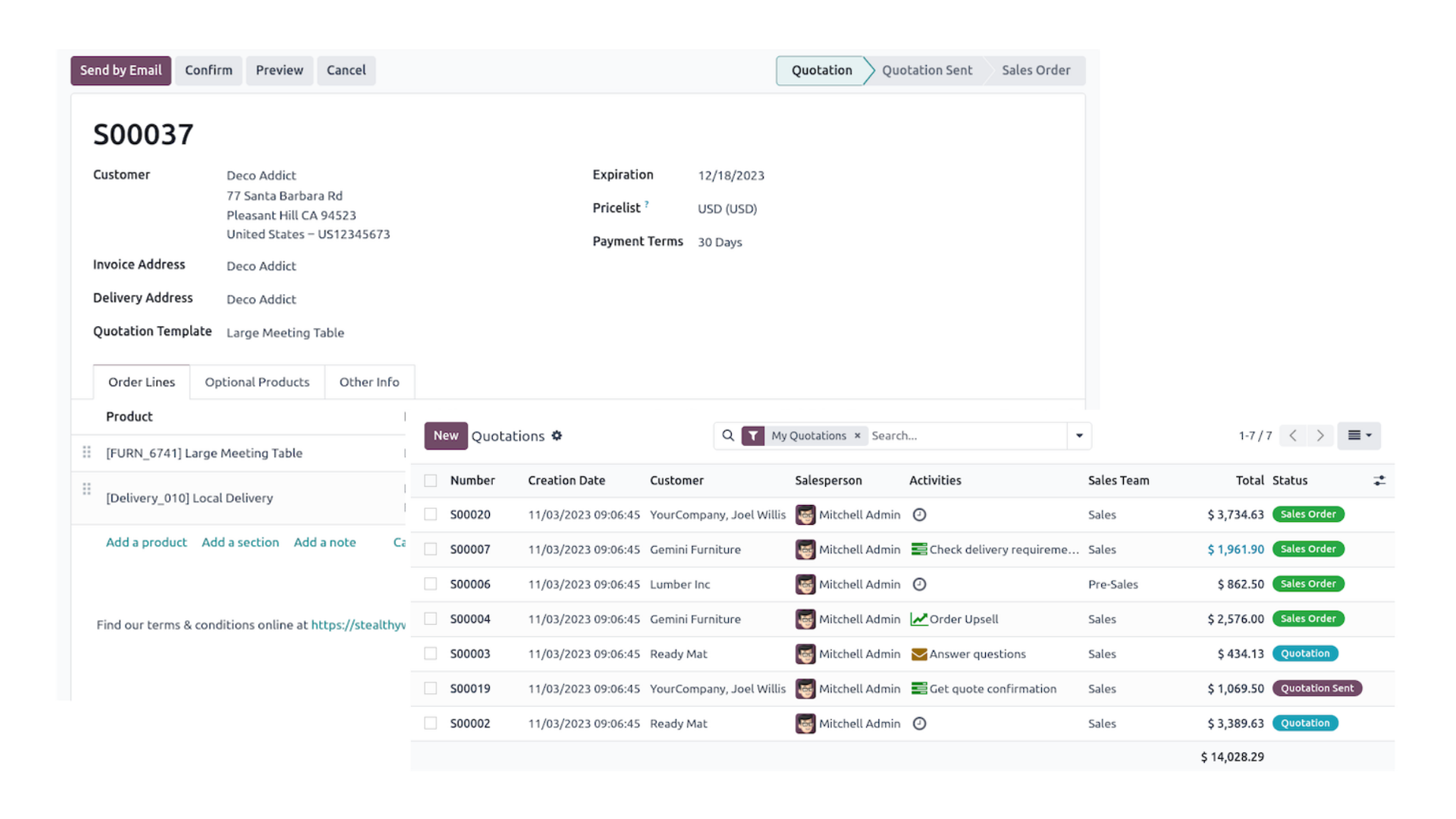
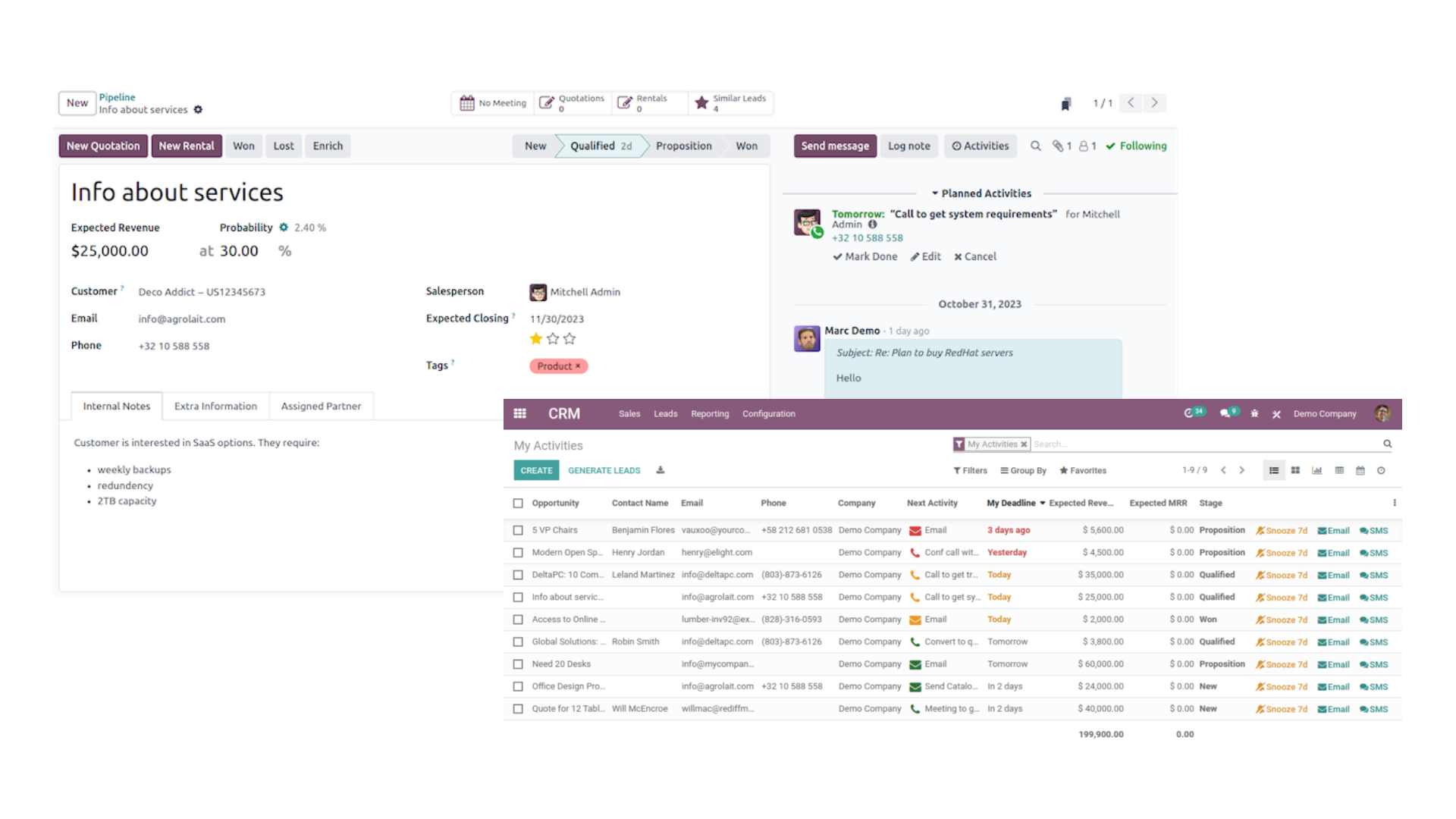
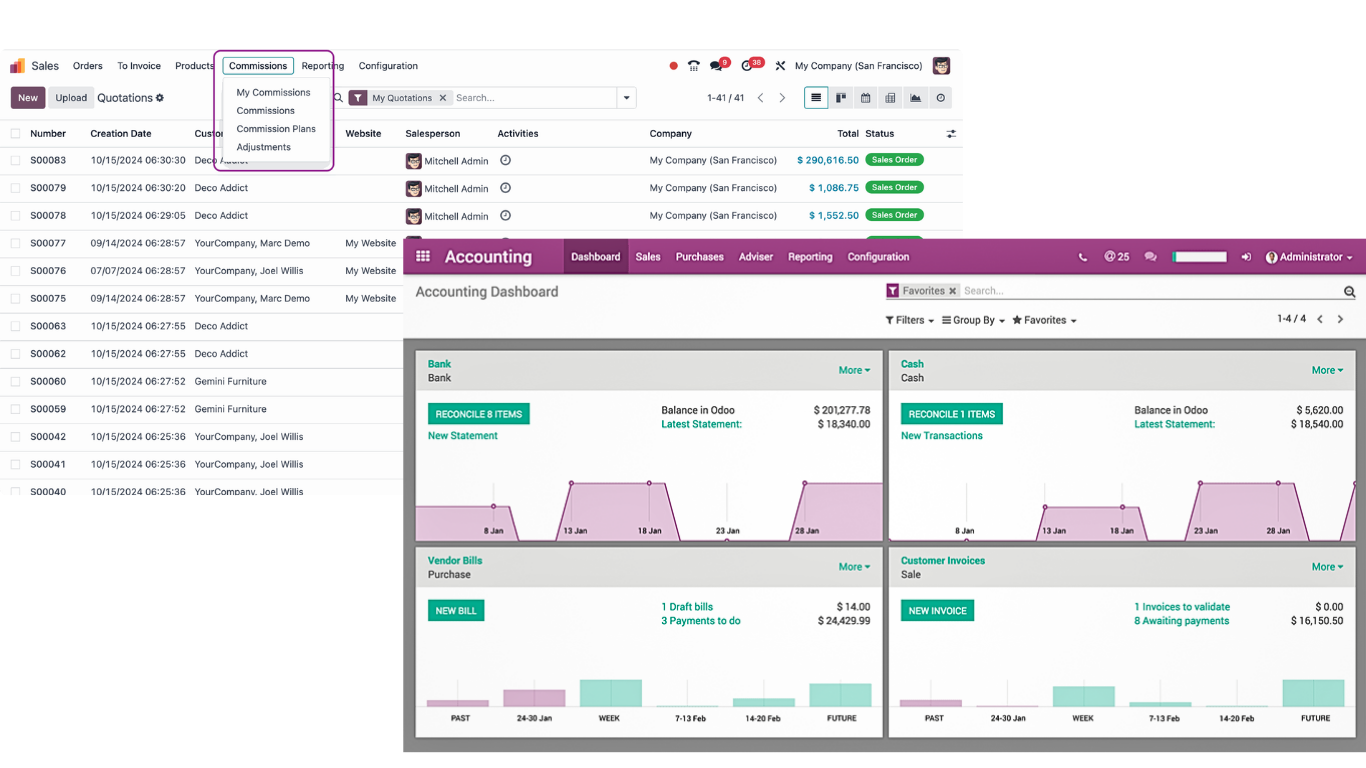
Unit inventory, CRM, contracts, and accounting share one database, so a deposit instantly updates the unit status, payment schedule, and commissions.
Scope
| Unit Inventory | Managed by project, building, floor, and unit; units locked and released automatically at the deposit deadline; unit inventory synced with distribution platforms |
|---|---|
| Sales Policies | Dedicated pricing, discounts, payment schedules, and commissions for each sale launch, without affecting signed contracts |
| Customers | The CRM keeps conversation history from Zalo, hotline, and email; handles co-ownership and transfers; and approves transactions through multiple levels |
| Contracts | One flow from reservation and deposit through the agreement to the sales contract and handover, with digital signing and centralized storage |
| Payments | Multi-installment payment schedules generated automatically from the policy, automatic reminders at each due date, and early warnings for overdue customers |
| Finance | Revenue recognized by progress, commissions based on cash actually collected, and profit, loss, and cash flow by project, building, and sale launch |
Related industries
The same platform, differing in configuration and in the operations that get priority.
Commerce
Multi-channel orders, multi-warehouse inventory, reseller price lists, and receivables.
View solutionManufacturing
Capacity-based planning, the Shop Floor app, quality, and lot traceability.
View solutionFrequently asked questions
Can multiple projects and buildings be managed at the same time?
Yes. Data is centralized, with access rights by project, building, and sale launch; developers can view consolidated reports or each project separately.
Can sales policies be changed between sale launches?
Yes. Each launch has its own price list, discounts, payment schedule, and commissions, without affecting contracts signed earlier.
How are multi-tier F1 and F2 commissions calculated?
Commissions are calculated automatically on cash actually collected and split across F1, F2, and distribution brokers according to the configured policy.
Can it connect to external distribution platforms?
Yes. An API syncs the unit inventory in real time with partner platforms to avoid double-booking across channels.
If we start with Launchpad, will anything have to be redone later?
No. The later levels add configuration on the same Odoo system and the same live data. Launchpad follows the standard first because standard parts rarely need rebuilding, and customization is decided once you understand clearly what the business needs.
How long does implementation take?
Usually 2 to 4 weeks for the first phase and 2 to 4 months for the full system at a mid-sized developer running 3 to 5 projects. The exact timeline is confirmed after the survey.
Is the data secure?
Data is encrypted, hosted on international-standard cloud infrastructure, backed up daily, and access is controlled by role.
Start with an operations survey
We walk through the journey from reservation to handover, record where the data between sales, accounting, and customer care diverges, and then propose the right starting level.
After the survey, you receive a record of the current state and a proposed roadmap.