
1. Service Management in the 4.0 Era
What is Customer Service Management?
Customer Service Management (CSM) is a strategic approach to managing and improving how businesses interact with their customers. Its primary goal is to ensure customer satisfaction, loyalty, and long-term engagement.
What is Service Management 4.0?
Service Management 4.0 is the combination of customer service management thinking and modern digital technology platforms. In the past, service management often meant responding to tasks as they arose and documenting them for reporting purposes. In the 4.0 era, service management connects customers, field staff, and managers on a single digital platform. Everything - from appointments and technician locations to materials - can be tracked in real time, allowing businesses to move from “guessing” to knowing exactly what is happening across operations.
2. New Standards of Service Management in the 4.0 Era
To maintain competitive advantage, modern service businesses need to establish operational “gold standards” such as:
Responsiveness and transparency
Service requests must be received quickly. More importantly, both customers and managers should be able to track service status in real time. This transparency eliminates information gaps and creates a strong sense of trust for customers.
Consistent quality and accurate data
Service quality must remain stable and not depend on individual judgment. Operational decisions should be based on real data rather than subjective estimates. Consistency in service quality is essential to protecting brand reputation when scaling teams.
3. Three challenges of using traditional software at scale
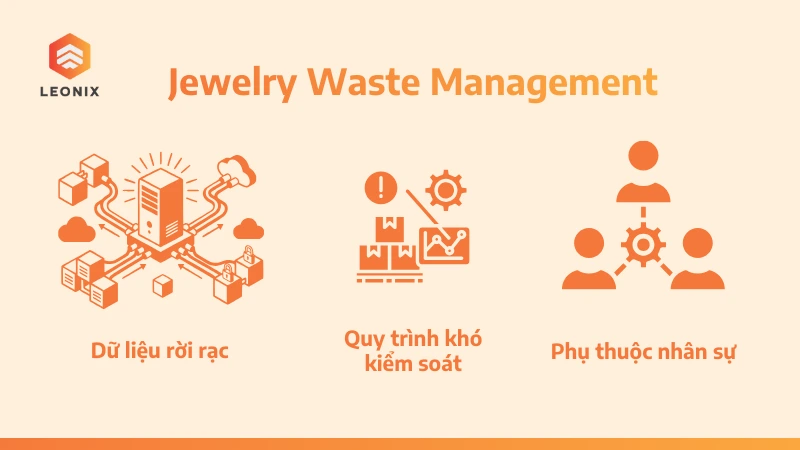
Ba thách thức khi áp dụng phần mềm truyền thống vào quy mô lớn
Fragmented data
Many businesses still use traditional software designed to handle separate functions: scheduling in one system, accounting in another, and customer service on a different platform. As a result, data becomes fragmented, employees must enter information repeatedly, and departments spend time reconciling data manually - reducing overall operational efficiency.
Lack of end-to-end visibility
In service industries, value is created throughout the delivery process, not just in the final result. However, simple management tools often only record “completed” or “not completed” statuses, without critical details such as: who is responsible, which stage the service is in, whether SLA commitments are being met.
Without detailed process data, managers cannot accurately evaluate productivity, service quality, or operational bottlenecks.
Heavy dependence on individuals
When processes are not fully digitized and standardized, service quality depends heavily on individual experience, skills, and memory. This makes scaling operations or opening new branches difficult, as knowledge transfer and staff training require significant time and resources.
Growth is not just about gaining more customers or orders. It also increases operational complexity. Businesses must handle more service scenarios, manage more customer touchpoints, and coordinate more closely across departments. Therefore, A suitable management system should act as a launchpad for smooth operations, not a barrier that slows down the organization as it scales.
4. How ERP solves the growth challenge
When businesses enter a growth stage, the key is not adding more tools, but adopting a system capable of managing the entire service lifecycle from end to end - ensuring operational, financial, and customer data are connected on a single platform and enabling managers to detect bottlenecks early. This is where ERP becomes the right solution.
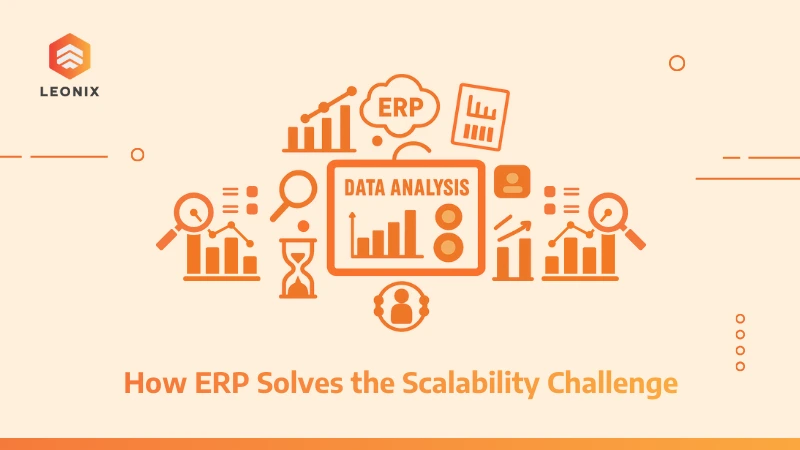
Cách ERP giải quyết bài toán tăng trưởng
Centralized data and real-time management
ERP integrates services, sales, finance, and more into one platform, eliminating duplicate data entry and ensuring consistent information. The entire service journey can be tracked: who is handling the task, which stage it is in, the current progress, and whether SLA commitments are met - allowing managers to proactively control operations instead of reacting to problems.
Standardized processes and data-driven decisions
ERP digitizes operational standards, ensuring consistent service quality and reducing dependence on individuals. With visual dashboards, leaders can quickly identify bottlenecks and make accurate decisions, turning growth into a real competitive advantage. In specialized industries, the system can also clearly distinguish between inevitable technical loss and loss caused by weak management control.
Learn more: ERP phần mềm quản lý thông minh giúp cho SMEs bứt phá
Traditional management software works well in the early stage of a business. However, during growth, companies need a stronger upgrade.
To compete on speed and customer experience, service businesses need a technology platform that is: deep enough to control processes, flexible enough to scale, and data-driven enough to support strategic decision-making.